Protected vs Unprotected Consumer: The 200-Unit Rule Explained
Protected vs Unprotected Consumer: The 200-Unit Rule Explained
Protected consumer MEPCO means a home user who stays at 200 units or less each month. NEPRA made this class for small homes. The reward is a low per-unit rate. The rule is strict. One high month breaks it.
Table of Contents
The Short Answer
A protected consumer MEPCO is a user on a non-ToU connection who uses 200 units or less for six months. The reward is a low rate of Rs 10.54 for the first 100 units and Rs 13.01 up to 200. One month above 200 moves you to unprotected rates.
Who Counts as a Protected Consumer?
NEPRA made this class in 2021. It covers homes on a normal residential connection. Your use must stay at 200 units or less. It must stay there for six months in a row. A single month above 200 breaks the run.
It is not an average. Some bill sites say the six-month average decides it. That is wrong. A month at 210 units breaks it, even if the average stays below 200. Exactly 200 units still counts. The line is 200 or less.
Think of a wedding month at home. Guests stay over. Fans and lights run all day. The bill jumps past 200. That one month costs you the low rate.
Time of Use connections do not qualify. If your meter is ToU, you pay ToU rates. This stays true even if you use less than 200 units. Big homes on 5 kW and above fall in this group. Check your connection type on the bill first.
Protected vs Unprotected Rates
The table below shows the rates that apply to your bill. These are the GoP rates under S.R.O. 279(I)/2026. NEPRA set them in its 11 Feb 2026 decision. Our MEPCO tariff page carries the full table.
| Category | Units | Rs per unit |
|---|---|---|
| Lifeline | Up to 50 | 3.95 |
| Lifeline | 51 to 100 | 7.74 |
| Protected | 1 to 100 | 10.54 |
| Protected | 101 to 200 | 13.01 |
| Unprotected | 1 to 100 | 22.44 |
| Unprotected | 101 to 200 | 28.91 |
| Unprotected | 201 to 300 | 33.10 |
A fixed charge also stays on the bill. It depends on your sanctioned load. Protected users pay Rs 200 per kW up to 100 units, and Rs 300 per kW up to 200. Unprotected users at 201 to 300 pay Rs 350 per kW. Lifeline users pay no fixed charge.
200 Units vs 201 Units: The Real Cost
Here is where one unit hurts. A protected home at 200 units pays Rs 2,355 for energy. That is 100 units at Rs 10.54, plus 100 units at Rs 13.01. A home at 201 units pays Rs 6,653.10. That is all 201 units at Rs 33.10. The gap is Rs 4,298.10.
Why does one unit cost so much? Unprotected users pay one rate on all units. The 201st unit pulls every earlier unit up to Rs 33.10. Protected users get the old slab benefit. Their first 100 units stay at Rs 10.54. Some bill sites add the slabs step by step for unprotected users. That method does not match the S.R.O. note. Use the single rate shown here.
These totals cover energy charge only. FPA and taxes come on top. Our FPA guide explains that add-on in simple words. The real bill is always higher than the energy charge alone.
How to Check Your Status on the Bill
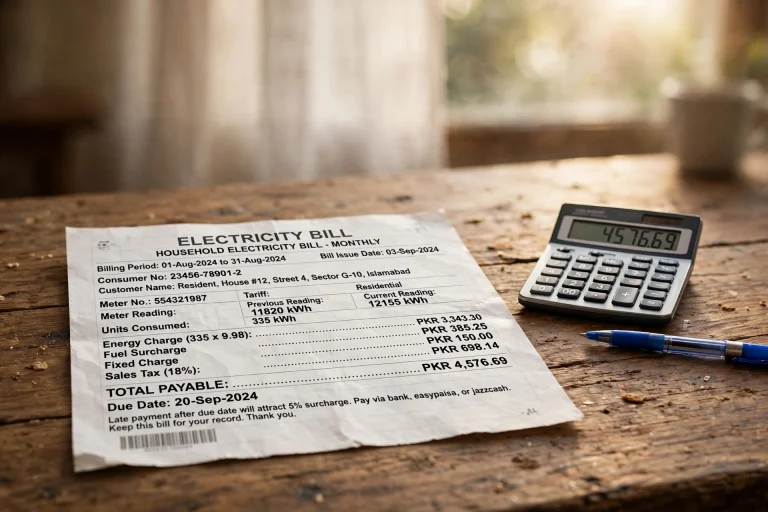
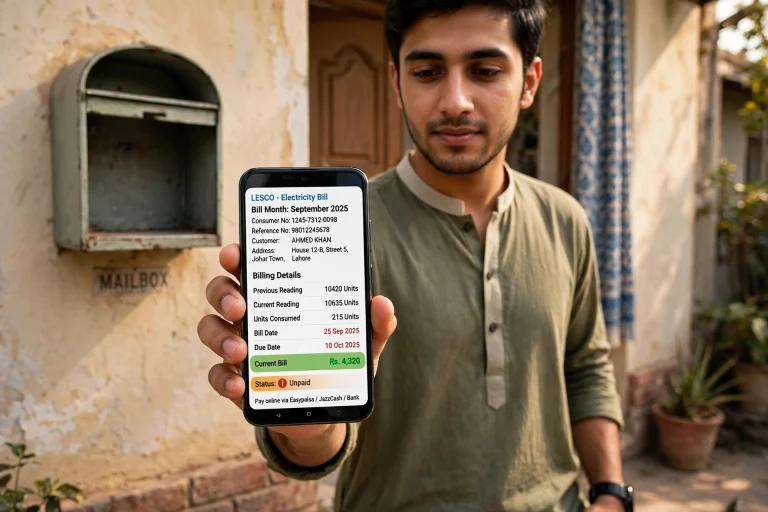
Pick up your latest bill. Look for the Category or Tariff field. It prints your class there. Protected or unprotected, it is written there in clear words. The bill also shows your last six months of use. That history tells you if you qualify.
Count back six months from the latest bill. Every month must show 200 or less. One month above 200 means you are unprotected now. Keep the old bills. You need them to prove the run.
A meter reader came late one month in summer. The reading covered more days. The units jumped past 200. That is the kind of month to watch for.
A missing bill blocks the check. You cannot count months you cannot see. Our bill not received guide shows how to get a copy. Get the missing bill first, then count.
How to Get Protected Status Back
Guides that track NEPRA rules say six straight months bring it back. Keep every month at 200 units or less. After six such months, ask MEPCO to check your class. This is the reported rule. Ask MEPCO to confirm your case. They hold the final word on your class.
June is the hard month. The heat pushes the air conditioner all night. One hot month can undo five careful ones. Plan for June before it comes.
Cut use where you can. Run the washing machine after peak hours. Our MEPCO peak hours guide shows the timings to avoid. A fan uses far less than an air conditioner. Small shifts add up over a month.
What Protected Status Does Not Change
Protected status cuts only the per-unit rate. FPA still applies to your bill. Taxes and surcharges still apply too. The fixed charge stays as well. A protected bill can still feel high in a bad month.
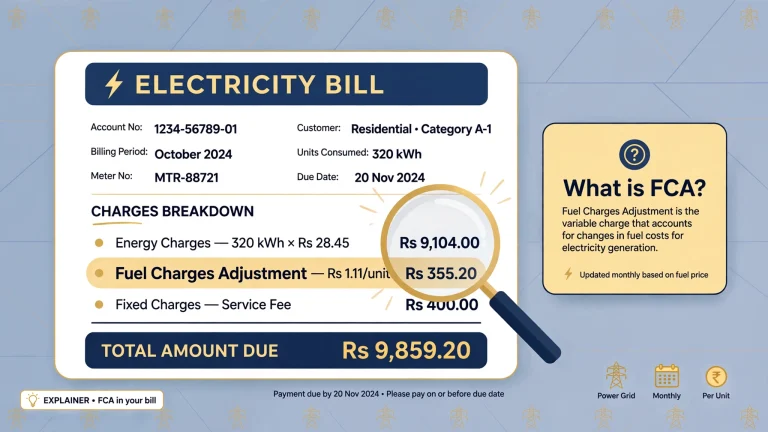
FCA is the other monthly add-on. It changes with fuel prices each month. Our November 2026 FCA guide shows the current figure. Add FPA, FCA, taxes and the fixed charge to the energy charge. That sum is your real bill.
What If Your Category Looks Wrong?
First, check the six-month history on your bill. If every month is 200 or less, your class should be protected. A wrong class can come from a wrong reading. Note the months and the units.
A neighbour once found a wrong reading on his bill. The meter reader had added an extra digit. One call fixed it. Check your own reading the same way.
Call the helpline on 118. You can also text your 14-digit reference number to 8118. MEPCO’s online complaint system takes the same case. Keep your reference number ready. Ask for a recheck of your category.
FAQs
Is exactly 200 units still protected?
Yes. The rule is 200 units or less. The 201st unit breaks it.
Is it a six-month average?
No. Every single month must be 200 or less. One month above 200 breaks the run, even if the average stays low.
Do ToU users get protected rates?
No. Protected status is for residential non-ToU connections only. ToU users pay ToU rates, even below 200 units.
Does FPA still apply to protected bills?
Yes. FPA, FCA, taxes and the fixed charge still apply. Only the per-unit energy rate is lower.
How do I check my status?
Read the Category or Tariff field on your bill. It also shows your last six months of use. Count back six months from the latest bill.
Our Verdict
The 200-unit rule rewards steady low use. It punishes one heavy month hard. A single unit can cost Rs 4,298.10 in energy charge. That is the honest math. Check your bill each month, and guard the six-month run.
We built this guide from NEPRA’s 11 Feb 2026 decision and the S.R.O. 279(I)/2026 rates. Some bill sites print old rates and the wrong average rule. We did not use them. If NEPRA changes the rates, this guide will be updated.