What Is FPA in Electricity Bill? Fuel Price Adjustment Explained
What Is FPA in Electricity Bill? Fuel Price Adjustment Explained
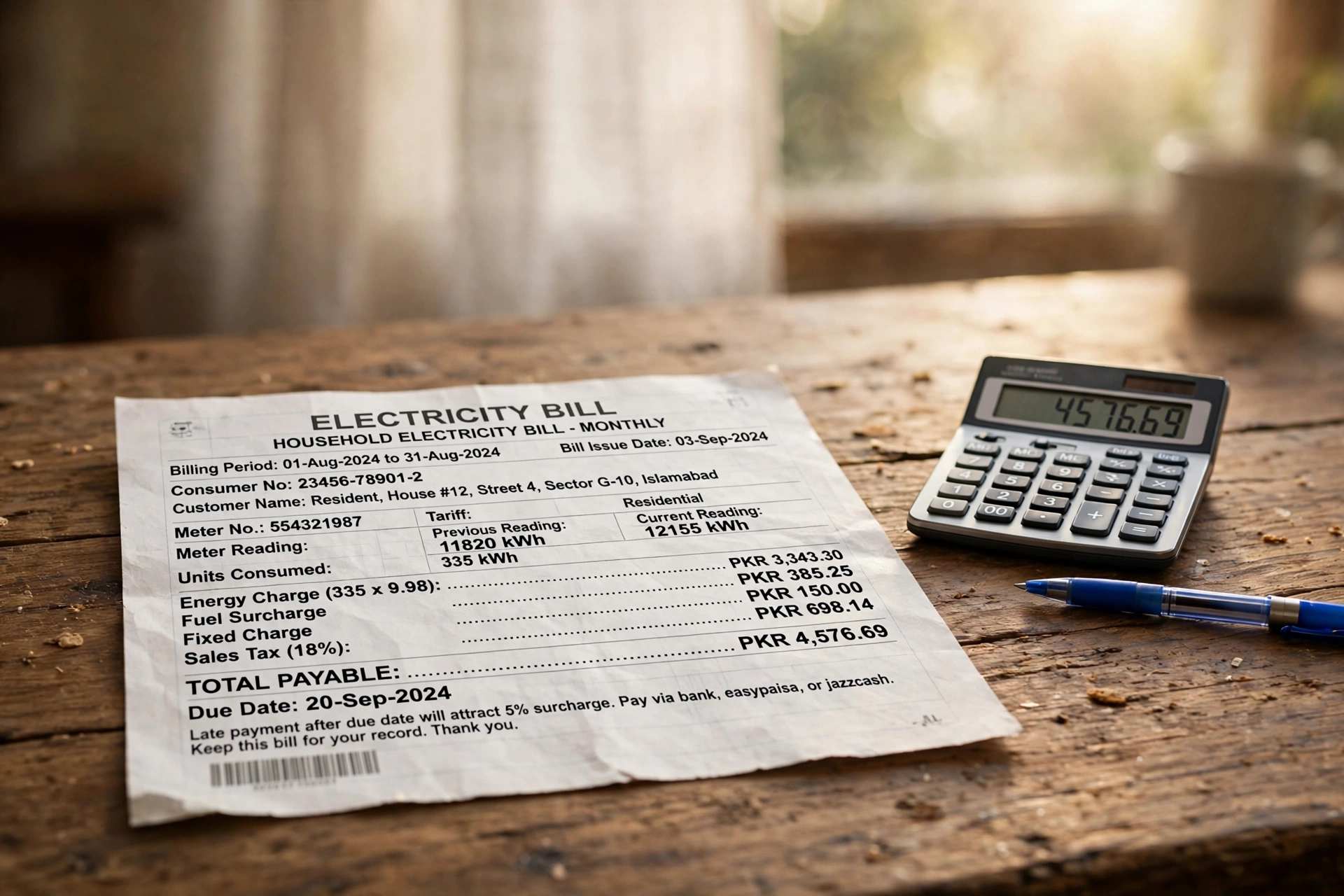
FPA in electricity bill means Fuel Price Adjustment. It is a monthly charge NEPRA adds to your bill. It covers the gap between the fuel cost in your tariff and the real fuel cost of the month. Your units stay the same, but this line still moves. That is why your bill can rise even when you used less power.
Table of Contents
What Is FPA in Simple Words?
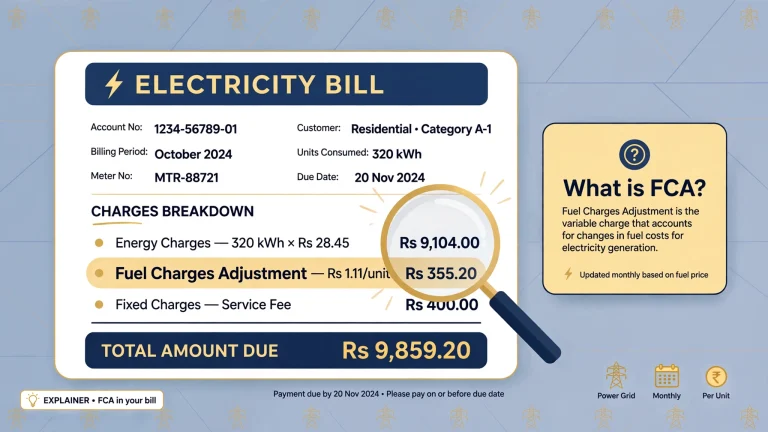
FPA stands for Fuel Price Adjustment. It is the monthly gap between the fuel cost in your tariff and the real cost of making power. Power plants burn oil, gas, coal and RLNG. Their prices change every month. NEPRA checks the real cost and passes the gap to you. Some bills print the same charge as FCA.
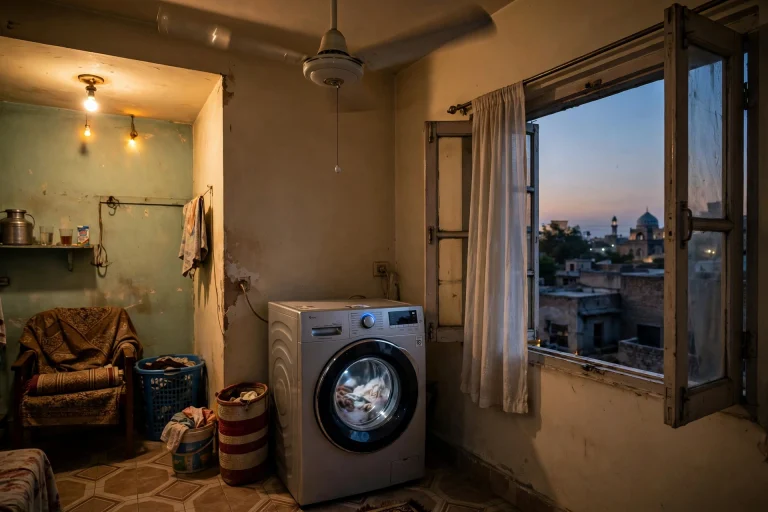
Think of the month your bill jumped by Rs 500. You checked the meter. The units looked normal. The FPA line was the reason. Many homes in Multan see this in summer. Fuel gets costly, and the line grows.
Why Does FPA Appear on Your Bill Every Month?
Your tariff is fixed for a year. Fuel prices are not. Oil and gas rates move with the world market. The rupee also moves. NEPRA cannot change your tariff every month. So it adds FPA as a small monthly fix. It keeps the power companies paid for real fuel cost.
The base rates sit in the MEPCO tariff 2026. FPA sits on top of those rates. It is not part of the slab rate. It is a separate line, and it changes every month.
How NEPRA Calculates FPA
NEPRA follows three steps. First, CPPA-G reports what power cost to make in the fuel month. Next, NEPRA compares it with the reference fuel cost in the tariff. Last, the gap becomes the FPA rate per unit. NEPRA then notifies the rate, and your DISCO adds it to the bill.
- CPPA-G collects the real fuel cost for the month.
- NEPRA compares it with the reference cost in the tariff.
- The gap, divided by units sold, becomes the FPA rate.
- NEPRA notifies the rate as an S.R.O.
- Your DISCO prints it on the bill two months later.
That two month gap confuses people. Your November bill carries September fuel. You pay for power you used two months back. This lag is normal, not a mistake.
FPA Rates in 2026
Three fuel months are decided so far this half of the year. July fuel cost Rs 2.0581 per unit. August fuel cost Rs 1.1086. September fuel cost Rs 2.3673. Each rate lands on bills two months later. The table below shows all three.
| Fuel month | Rate per unit | Bill month |
|---|---|---|
| July 2026 | Rs 2.0581 | September 2026 |
| August 2026 | Rs 1.1086 | October 2026 |
| September 2026 | Rs 2.3673 | November 2026 |
The latest rate is the November 2026 FCA of Rs 2.3673 per unit. NEPRA decided it on 6 November 2026. The order is S.R.O. 2094(I)/2026. CPPA-G had asked for Rs 2.5624. NEPRA cut it by about 20 paisa. The actual fuel cost was Rs 9.8268. The reference cost was Rs 7.4596.
October fuel is still open. CPPA-G has asked for Rs 2.8819 per unit. NEPRA will hear it on 26 November 2026. No rate is decided yet. Do not trust any October figure until NEPRA notifies it.
How Much FPA Will You Pay?
Multiply your fuel month units by the rate. That is the whole math. Take September units, not November units. A home that used 300 units in September pays Rs 710.19. A home that used 500 units pays Rs 1,183.65. GST sits on top of this amount, so the final hit is a bit higher.
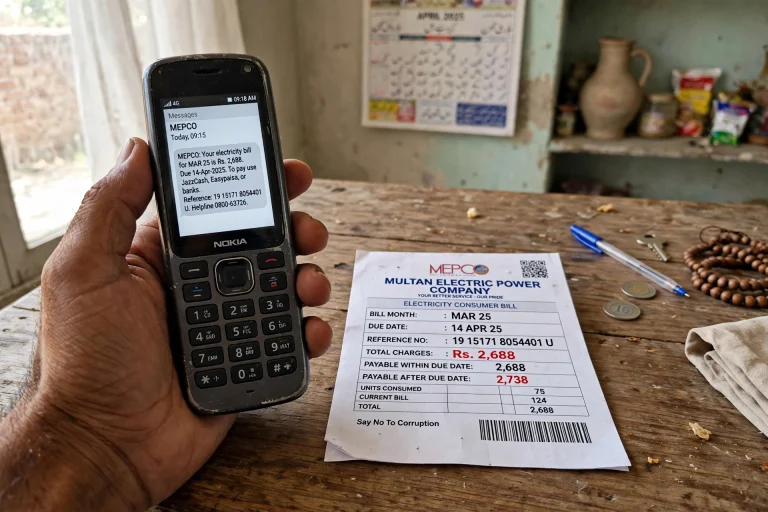
Want the full bill, not just FPA? Use the MEPCO bill calculator. Put in your units and it adds the slabs, FPA and other charges. The result is an estimate. Your real bill may differ by a few rupees.
FPA vs QTA: Do Not Mix These Two Charges
FPA is monthly. QTA is quarterly. FPA covers fuel cost only. QTA covers capacity charges and plant upkeep. The QTA for September to November 2026 is Rs 0.5194 per unit. Both lines can sit on the same bill. They are two different charges, not a double count of one.
People see two adjustment lines and think the company charged twice. It did not. One line is fuel. The other line is capacity. Both are NEPRA decisions, and both are printed apart.
NEPRA publishes each decision on its own site. You can read the orders at nepra.org.pk. The site lists the FCA and QTA decisions month by month.
Who Does Not Pay FPA?
Three groups are exempt. Lifeline consumers pay no FPA. Electric vehicle charging stations are exempt too. Prepaid meter users are also out. Every other home and shop pays it. If your bill shows no FPA line, check your consumer type first.
Can You Reduce FPA on Your Bill?
You cannot cut the FPA rate. NEPRA sets it for all users. You can only cut the units it multiplies. Fewer units mean less FPA in rupees. Run heavy appliances outside peak hours. A fan left on all night adds units, and each unit carries FPA.
Peak hours run from 6 pm to 10 pm. Power costs more in this slot. Shift the iron and water pump to the morning. Our peak hours guide shows which hours to avoid.
FAQs
What is FPA in electricity bill?
FPA in electricity bill means Fuel Price Adjustment. It is the monthly gap between the fuel cost in your tariff and the real cost of making power. NEPRA sets the rate every month. Your bill multiplies it by your units.
Is FPA the same as FCA?
Yes. FCA means Fuel Charges Adjustment. It is the same charge with a second name. Some bills print FPA, some print FCA. The rate and the rule are the same.
Why is FPA different every month?
Fuel prices change every month. Oil, gas and RLNG rates move. The rupee moves too. NEPRA works out a fresh rate from real costs. That is why the line never stays fixed.
How much is FPA in November 2026?
It is Rs 2.3673 per unit. This is the September 2026 fuel charge. It sits on November bills. A 300 unit home pays about Rs 710 before tax.
Can FPA be removed from my bill?
No. You cannot ask MEPCO to drop it. It is a NEPRA decision, not a company choice. Lifeline users are exempt. For others, the only way to pay less FPA is to use fewer units.
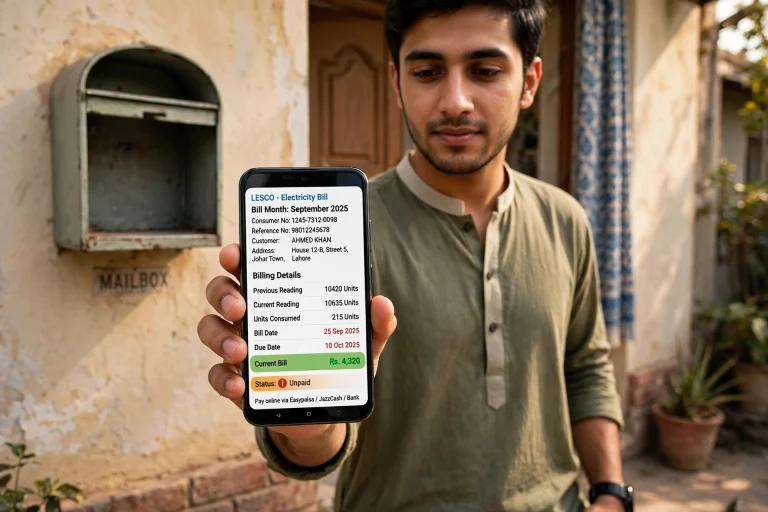
Check the FPA line on your own bill. Open the bill check page and check your MEPCO bill with your reference number. Match the rate with the table above. If the rate is wrong, call helpline 118.